Your Cart is Empty

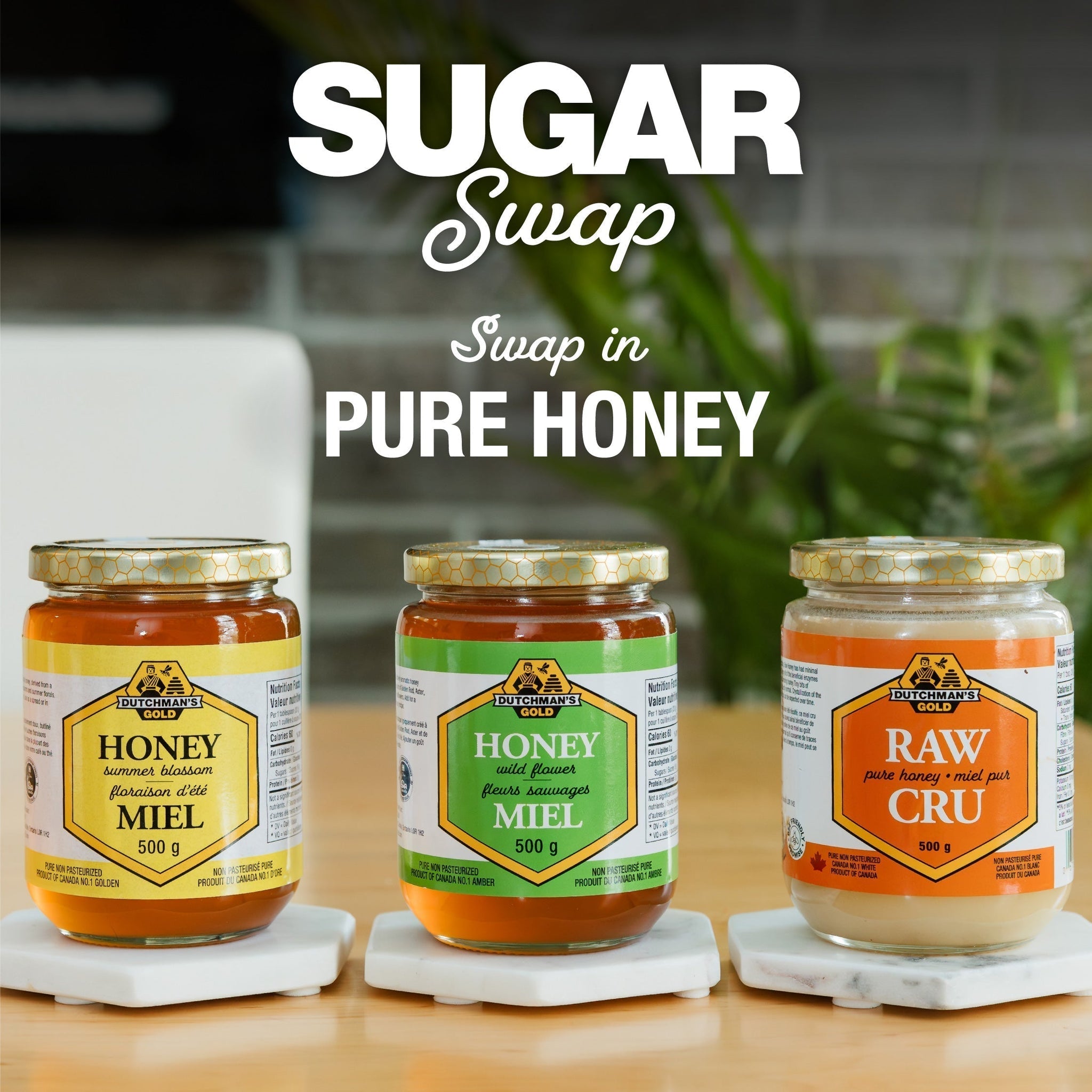
Sugar Swap started for us years ago as a simple idea: what if we didn’t cut sweetness out of our lives… but chose better sweetness instead?
As a nutrition practitioner, a busy mom, and someone who believes food should support real life, I’ve seen firsthand how small changes compound. Sugar Swap isn’t about perfection or restriction. It’s about replacing refined sugars with real, nutrient-rich sweeteners, starting with unpasteurized honey, in ways that feel easy, delicious, and sustainable for the whole family.
Why Sugar Swap Exists
Refined white sugar adds sweetness, and very little else. It’s highly processed, stripped of nutrients, and contributes to rapid blood sugar spikes followed by crashes that leave us tired, hungry, and craving more.
When sugar shows up everywhere- sauces, marinades, baked goods, drinks, it quietly becomes part of our daily load, not an occasional treat.
Sugar Swap exists to:
Reduce refined sugar exposure
Support steadier energy and mood
Help families build healthier habits without losing joy
Why unpasteurized Honey Is a Better Place to Start
Honey is still sugar, and that matters, but it’s fundamentally different from white sugar.
Honey:
Is less processed
Contains trace minerals, enzymes, and antioxidants
Has a lower glycemic impact than refined sugar when used appropriately
Delivers more flavour, meaning you often need less
From a holistic nutrition perspective, honey works best when it’s paired with fibre, protein, and healthy fats — which is exactly how we use it in Sugar Swap recipes.
NEW: Evidence-informed perspective
Emerging research continues to reinforce what traditional food cultures have known for centuries: honey functions as more than a sweetener. A 2025 critical review highlighted honey’s role as both food and medicine, noting its antioxidant, antimicrobial, and immunomodulatory properties when used as part of a balanced diet (Sharaf El-Din et al., 2025).
More recent comprehensive reviews also emphasize that honey may support metabolic health when it replaces refined sugars, rather than being added on top of an already sugar-heavy diet (Palma-Morales et al., 2023). This distinction matters — Sugar Swap is about substitution, not excess.
The Golden Swap Formula

Honey is sweeter than sugar. Using less isn’t deprivation — it’s balance.
The Most Important Rule of Sugar Swap
We don’t sugar swap junk food.
We only swap sugar in recipes that already include:
Vegetables or fruit (fibre)
Protein
Healthy fats
This is what makes Sugar Swap healthy, not just “less bad.”
Everyday Ways to Use Honey Instead of Sugar
Stir into yogurt with berries and nuts
Sweeten tea or lattes naturally
Use in marinades and stir-fries
Bake with intention (not excess)
Recipe: Everyday Honey Garlic Stir Fry Sauce

This recipe replaces the refined sugar often found in store-bought sauces with honey — without overwhelming sweetness.
Ingredients
2 Tbsp raw honey
¼ cup tamari or coconut aminos
1 Tbsp rice vinegar or lemon juice
1 Tbsp olive or avocado oil
2 cloves garlic, minced
1 tsp fresh ginger
Optional chili flakes
How to use
Toss with vegetables and your protein of choice. (I love chicken or shrimp). Serve over rice, quinoa, or cauliflower rice.
Why this works
Traditional sauces often contain 2–4 Tbsp refined sugar. This version uses less honey, balanced with protein, fibre, and fat — supporting steadier blood sugar and better energy.
Final Thought
Sugar Swap isn’t about eliminating sweetness, it’s about choosing it more intentionally. That includes knowing where your food comes from and who stands behind it.
Our honey comes from Canadian beekeepers we know and trust. Supporting Canadian honey helps strengthen our local food supply, protects beekeeping communities, and supports pollination systems that are essential to our environment and agriculture. Choosing honey produced closer to home also means fewer food miles and greater transparency — something that matters more than ever.
As a second-generation, family-run business, we believe trust is built over time. Sugar Swap reflects that belief: real ingredients, responsibly sourced, and chosen with care for the families who enjoy them.

References
Sharaf El-Din, M. G., Farrag, A. F. S., Wu, L., Huang, Y., & Wang, K. (2025). Health benefits of honey: A critical review on the homology of medicine and food in traditional and modern contexts. Journal of Traditional Chinese Medical Sciences, 12(2), 147–164. https://doi.org/10.1016/j.jtcms.2025.03.015
Palma-Morales, M., Huertas, J. R., & Rodríguez-Pérez, C. (2023). A Comprehensive Review of the Effect of Honey on Human Health. Nutrients, 15(13), 3056. https://doi.org/10.3390/nu15133056
Atkinson, F. S., Foster-Powell, K., & Brand-Miller, J. C. (2008). International tables of glycemic index and glycemic load values. Diabetes Care, 31(12), 2281–2283. https://doi.org/10.2337/dc08-1239
Bogdanov, S., Jurendic, T., Sieber, R., & Gallmann, P. (2008). Honey for nutrition and health: A review. Journal of the American College of Nutrition, 27(6), 677–689. https://doi.org/10.1080/07315724.2008.10719745
Daniluk, J. (2014). Becoming sugar-free: 8 weeks to freedom from sugar and carb addiction. Random House Canada. https://www.penguinrandomhouse.ca/books/646663/becoming-sugar-free-by-julie-daniluk/9780735240537
Health Canada. (2020). Sugars and health. Government of Canada. https://www.canada.ca/en/health-canada/services/nutrients/sugars.html

